Case study · Syngenta, 2011–2026
Global Agricultural Recommendation Platform
Fifteen years building E-Luminate, GHX Fields, and Cropwise for Syngenta: from a regional sustainability tool to seed-recommendation systems that a few hundred advisors use to serve 10,000+ growers per platform, across North America, South America, and Europe. Some details stay at category level out of respect for Syngenta's confidentiality.
Film · 55 seconds
The platform, assembled
- 2011
E‑Luminate starts as a sustainability app in crop protection, with a seed catalog.
I led the platform’s architecture and engineering org.
- 2017
The seed catalog becomes the primary seed recommendation and ordering platform in the US, with Game Plan for whole-farm planning across brands. In the last five years, more than $800 million in sales went through it, to over 80,000 growers.
- 2020
We take it global as Cropwise Seed Selector: Brazil, Argentina, the UK, Germany, Hungary, Ukraine, and more. E‑Luminate serves the US, and Canada from 2024. Cropwise Planting follows as a South America pilot.
I owned the finished product.
- Shared layer
Every region structures its sales network differently. One sales-hierarchy model serves all of them, across every app.
I designed the abstraction.
- Field health
Weather, disease models, satellite imagery, scouting, and field activity become health and yield potential for every field, delivered as PDF reports by email. E‑Luminate is now GHX Fields.
I designed it and wrote much of the code.
- 2026
Root Cause puts AI into production: it reads 90,000 fields a week and flags risks and fixes to advisors, reps, and growers before anyone asks.
I led it into production.
- Migration
Twenty systems move from Azure click-ops to AWS, defined in CDK, in six months, and features keep shipping.
I planned and led the AWS migration.
- Services
Auto-scaling Fargate services. Every one talks to Redis and Temporal directly; some use SQL Server, some RabbitMQ. All of it runs in AWS, deployed by CDK.
I designed and built the service architecture.
- Observability
Every service sends traces, logs, and metrics to an OpenTelemetry Collector, which splits them to Datadog and to Prometheus, Mimir, Loki, and Tempo, with Grafana dashboards on top. SOC 2 Type 2 passed.
I built and ran production observability.
- Credit
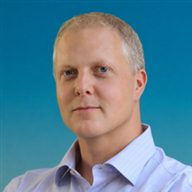
Nicholas Elliott, Founder & CTO of Skyward App Company: architect and engineering org lead behind Syngenta’s seed platforms, 2011–2026.
The problem
Every region farms differently
A seed recommendation depends on agronomic data, weather, product catalogs, territory rules, discounts, and sales hierarchies — and every one of those works differently in Iowa, Mato Grosso, and Hungary. Building a separate app per market would have buried the team in duplicate work. The durable value was a set of platform abstractions that absorbed regional differences instead of multiplying them.
Architecture
The shape of the platform
Commercial Web Apps
Seller and agronomist tools that grew from a regional sustainability app into recommendation systems used by a few hundred advisors serving 10,000+ growers.
Recommendation & Catalog Systems
Whole-farm seed strategy, product catalogs, branded PDF generation, soil and weather characteristics, discount and diversification logic.
Enterprise Integrations
Salesforce, SAP, regional sales hierarchies, product catalogs, and territory abstractions shared across product teams.
AI Analysis
Root Cause proactively analyzes agronomic and environmental patterns across 90,000 fields a week, surfacing concerns and suggested mitigations.
Cloud Modernization
Twenty systems moved from Azure click-ops and .NET Framework to AWS CDK, Fargate, Lambda, and VPC-segmented infrastructure in six months.
Operations & Trust
OpenTelemetry with Grafana, Prometheus/Mimir, Loki, and Tempo, centralized secrets, and the operational maturity behind a 2025 SOC 2 Type 2 audit.
My role
What I was accountable for
Led architecture and the engineering organization behind the platforms for fifteen years, 2011 through 2026.
Owned architecture and modernization strategy across cloud, services, integrations, data, and UI.
Led a US-distributed engineering team and owned the finished product, integrating work from partner teams in India, Brazil, Egypt, and Europe.
Mentored and planned the handoff so Syngenta’s internal teams could own the platforms outright.
Outcomes
What the numbers say
- E-Luminate / GHX Fields: a few hundred advisors serving 10,000+ growers across the US and Canada.
- Cropwise: similar scale in international markets including Argentina, Brazil, Germany, Ukraine, and Hungary.
- Azure-to-AWS migration: 20 systems in six months, 25% lower burn rate, 75% faster deployments.
- Enterprise integrations with Salesforce, SAP, and a sales-hierarchy abstraction reused across regions.
- SOC 2 Type 2 passed in 2025, built on observability and processes the team already ran.
- Root Cause shipped to production in 2026: 90,000 fields analyzed weekly, reaching 90% of growers.
Technology
The stack, with receipts
Cloud
AWS CDK, Fargate, Lambda, API Gateway, VPC, Azure migration
Migrated 20 systems from Azure to AWS in six months: 25% lower burn rate, 75% faster deployments.
AI
LLM APIs, Root Cause, report generation, vLLM, Ollama
Root Cause analyzes 90,000 fields a week in production; local-model experiments with vLLM and Ollama.
Observability
OpenTelemetry, Grafana, Loki, Tempo, Prometheus/Mimir, Datadog
Instrumented the Syngenta platforms end to end; the same telemetry became SOC 2 audit evidence.
Enterprise Integrations
Salesforce, SAP, internal systems, sales hierarchy abstraction
One sales-hierarchy abstraction serving commercial workflows across three continents.
Backend Platforms
.NET, .NET Core, Node.js, REST APIs, Redis, RabbitMQ, Temporal
Service boundaries, caching, and workflow engines for systems that have run for over a decade.
Frontend & Mobile
TypeScript, React, Knockout migration, iOS, Android, React Native
Rebuilt the advisor tools from Knockout-era web apps into the React interfaces advisors use with growers today.